AdUnit3

Monday, May 30, 2016

Kalpa - Into the Land of Buddha


Himalayan view at Kalpa
Himalaya at Kalpa
When I planned to visit Kalpa, in Kinnaur, people back in Kolkata said you are going to the doorstep to heaven. After visiting Kalpa, I could surely agree to them. I have indeed been to the doorstep to heaven, if not into the heaven.

Fagu & Narkanda

The journey towards Kalpa started on an early summer day, from Fagu in Himachal. Fagu is an extremely beautiful place with lush green valleys and apple orchards all around. Those seeking respite from the urban chaos of Shimla, Fagu can be an ideal leisure destination for them. We reached HPTDC's Apple Blossom Hotel at Fagu on a rainy afternoon which later turned into a heavy thundershower. I was worried, if I would get a clear sky in Kalpa. The view of Kinnaur Kailash range from Kalpa, is to die for and I hardly wanted to miss that. Luckily things got cleared up late in the evening and we got some rain drenched view of the valley in Fagu.


Fagu Valley View HPTDC
 Valley view from HPTDC Fagu
Next morning we started really early from Fagu. By 9 am we reached Narkanda, one of the highest area, in the Hindustan-Tibet road. The view from Narkanda is superb. The lofty hills covered with thick deodars were looking fresh, after the overnight rain. In the lower slopes we could see the apple orchards. It was early summer, the flowering season is over, and most of the trees were now laden with baby apples.
Narkanda to Kalpa
Driving Past Narkanda to Kalpa
We had our breakfast in a road side restaurant in Narkanda. We planned to drive nonstop from Narkanda to Kalpa, which could take almost 6 hours. So we refueled ourselves with a heavier than usual breakfast. 3 sumptuous tandoori alu parantha with some red hot chutney and a cup of piping hot Pahari chai with a milk and sugar overdose. In the cold morning, it was the best thing we could have asked for.

After Narkanda we started climbing downhill till Rampur. Rampur is a busy town, on the banks of Sutlej, and the erstwhile capital of the Rampur Bushahr region. The markets were crowded, and the weather was hot. Only beauty was the streets canopied with violet Jacaranda - a summer gift of the nature in this region. We quickly drove past Rampur, and once again purred on the hilly roads. Within next hour we crossed Jeori, the last big settlement in this route and entered Kinnaur. A gate erected on the roadside greeted us – ‘Welcome to Devbhoomi Kinnaur’.

Entering Kinnaur...

As we entered Kinnaur district the road condition deteriorated a bit. From Fagu till Jeori it was a silky smooth drive, within the Shimla district, however Kinnaur, being a remote district, the development seemed to have taken a backseat. The roads became narrow, and more rugged. But it was still manageable. The traffic also became less. We could hardly find cars and buses coming from opposite end. It took us another hour to reach Wangtu. As soon as we crossed Wangtu, we realized we are in for a rough ride. The metaled road gave way for a dirt track. The next 35 kilometers till Powari, would be like this. Our car somehow crawled in this nonexistent road, for next 3 hours to reach Powari. Along the way we had the raging torrent of Sutlej as the only companion. The population along the road was also nonexistent. With the rugged mountain all around us, It felt like we were driving through a different planet altogether.

Satluj in Kinnaur
Entering Kinnaur - The Raging Satluj with Kinner Kailash in backdrop
From Powari, we left the Hindustan Tibet road, and took a detour towards Recong Peo – the district headquarter of Kinnaur and more popular as ‘Peo’ among the locals. The road condition improved. We started climbing uphill, the vegetation also changed, we could see more deodar and apple trees in the hill slopes. 
Suddenly after a sharp bend, the mighty Kinnaur Kailash range appeared in all its glory. It was so close, it felt like you could almost touch it. We understood, we were entering the Devbhoomi. For the rest of the journey till Kalpa, the mighty snow peaks accompanied us. It was almost 2.30 p.m. when we reached Kalpa. We had covered 214 kilometers of road in 7 long hours.
Kalpa - The First View
Kalpa - The Jewel of Kinnaur

Kalpa was love at first sight. It had to be. We had our accommodation booked in the Kinner Kailash hotel run by HPTDC. It is on the highest point at Kalpa, and from the compound you get an unobstructed view of the Kinnaur Kailash range. Even in an early summer afternoon, the sky was clear enough to let us enjoy the majestic mountains. The Kinner Kailash Sivalinga which is a monolithic 73 feet high stone, was also clearly visible on top of Kinner Kailash peak. This Sivalinga is indeed a wonder of the nature. How a 73 feet high stone is standing on top of a mountain peak, is beyond imagination, but that’s why Kinnaur is called the Devbhoomi.

Kinnaur Kailash Cottages
The hotel is aesthetically built, in traditional style with wood finish, which blended perfectly with the nature. The check in was hassle free. We had the booking of the Kinnaur Kailash cottages - a separate building couple of steps away from the main Hotel building, which housed two beautifully decorated suite cottages on upper floor. We immediately liked the accommodation. After the long journey, we were tired, so refreshed ourselves with a nice bath, and had a quick nap. The nap had to be short enough so that we don’t miss on the nature’s bounty much.

Health Center Kalpa
What a view - Primary Health Centre Kalpa
By 5.30 p.m. we were back in outdoors. In these western part of India, sunset doesn’t happen before 7 o clock. So we had ample time to enjoy a quick walk around the village and enjoy the surroundings. 
Kalpa is one of the larger villages in Kinnaur. Due to the apple production, the economy of the area is also developed, and the living standard of villagers are also quite high. That reflects in the village houses. Most of the house in the village is double storied, have nice traditional decorations and typical Kinnaur style slate roofs. 
The culture is a mix of Hinduism and Buddhism. There is a definite influence of Tibet in Kinnaur’s culture, and Kalpa is no different. The village has a monastery and a temple side by side, and they remain in complete harmony. When we were walking through the village, the monastery was playing the chant of Abolokiteshwar, and the divine music reverberating from the high hills, created a magical ambiance in the entire village. This chant is a symbol of peace, and Kalpa probably was the best place to play that music.
Jorkanden peak at Kalpa
Sunset on Jorkanden Peak at Kalpa
Next in store for us was a brilliant sunset. The setting sun painted the majestic Kinner Kailash range in its golden hues. All the snow peaks starting from Kinner Kailash in left to Jorkanden in right were painted in gold. The entire range in its golden avatar created an ethereal effect. Slowly the sun set, and the golden peaks turned white once more. As the evening set in, I thanked the almighty for creating such a spectacle, and letting us experience the same.
Himalaya from hotel Kinner Kailash compound
The evening created another surreal effect in Kalpa. Since the snow peaks are so close in Kalpa, even in the moonlight they could be clearly visible in distance in their white attire. As soon as the sun set, the nip in the air became a chill, and we had to huddle inside the quilt. But that didn't prevent us from enjoying the nature. 
Through the big French window in our cottages, we could clearly see the majestic snow peaks even in the moonlit night. We switched off all the lights inside the room, to reduce the reflection and to clearly see the mountains. It was really an awesome experience.

Birding at Kalpa
Birding at Kalpa - Coal Tit
Next Morning - At Roghi & Kothi Villages

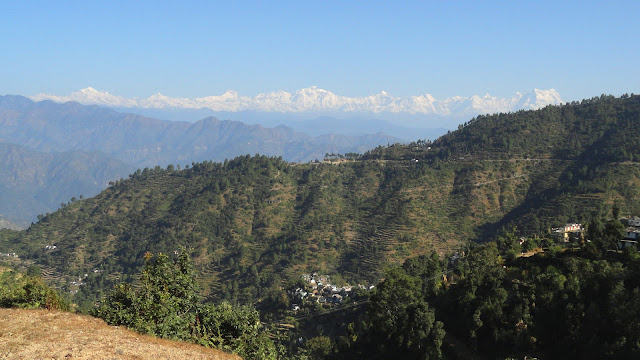
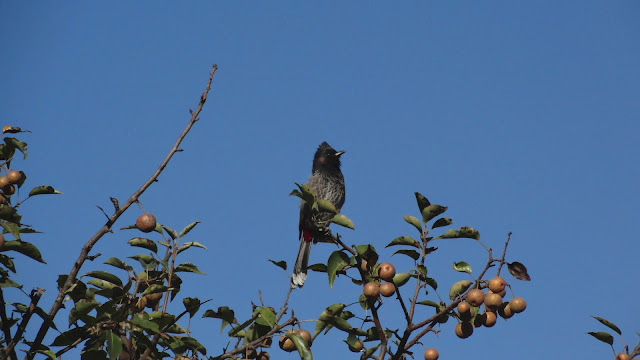
Next morning we wake up early to watch the sunrise. Though not as spectacular as the sunset, the morning colors in the sky looked amazing. The birds were chirping in the orchards. I tried to click few of them, and after few attempts got some decent snap of a ‘Coal Tit’ and a ‘Himalayan Bulbul’.

Roghi Village Kinnaur
After a hearty breakfast we once again set out to explore the vicinity. Roghi village, situated 3 kms. walking distance from Kalpa is another scenic spot in the region. The road that goes to Roghi is one of the most dangerous road in this entire region. It’s a single lane narrow mountain road, with a sheer drop of more than thousand feet along its edge. One such corner of this road is named as suicide point, and aptly so. If you have vertigo, please don’t travel in this road. 
Road to Roghi from Kalpa
We walked along this road, enjoying the scenic beauty. The Snow Mountains were visible in the distance flanked by occasional deodars. Roghi is a typical Kinnauri hamlet with slate roofed village houses and apple orchards. As we entered the village, people greeted us with a smile. We roamed around a bit on the nook and corner of the village, visited the Vishnu temple on the village, and returned back to our hotel. More than the village, it’s the road which enticed us.
Next we drove back to Recong Peo, for some marketing. Peo has quite a bustling market square. We were looking for some authentic Kinnauri shawl. We got that in a shop. The shawls were beautiful, with intricate designs. However the range starts from 10K onwards. That was too high for us, so we had to drop that plan. Apart from apple Kinnaur is famous for Rajma. So we bought some local rajma as a token from the market.
Durga Temple Kothi Vilage
Durga Temple at Kothi Kinnaur
During return we visited the beautiful Durga temple at Kothi village, which is in between Peo and Kalpa. The temple has intricate wooden carvings and a sprawling courtyard. Kothi is a model village under the Swach Bharat Campaign. The cleanliness around the village was really astonishing. It was really a pleasure to walk around the squeaky clean village lanes with Snowy Mountain in the backdrop.
The afternoon was once again spent in the hotel compound watching the brilliant sunset once more.
Our sojourn in this beautiful part of world was coming to an end. But we made a promise to ourselves to come back to the ‘doorstep to heaven’ once more. Kinnaur is the gateway to Spiti, so maybe it is Spiti where we will find the heaven on earth. Till then, let’s hope Kinnaur keeps its pristine beauty alive!

Travel Tips


When Visiting Kinnaur, you can start your Journey from Fagu, instead of Shimla
HPTDC Fagu Apple Blossom is a very scenic Hotel
Start early and drive non-stop from Fagu to Kalpa. It will take around 7 hours
HPTDC Kinnaur Kailash is the best accommodation at Kalpa
Kinnaur Kailash cottages have beautiful suite rooms with privacy
Walk aimlessly around the villages near Kalpa. They are beautiful.
Come early April. The apple orchards will be in full bloom with white flowers


Sunday, January 18, 2015

Sitlakhet and Syahi Devi - A winter tale in Kumaon


Himalaya at Sitlakhet - from the foliage
Sitlakhet is a sleepy serene mountain village in Kumaon, just 32 kms away from Ranikhet. Its only during the peak season, when people come here to stay in the KMVN bungalow, unable to find a room in some other famous places, but this place certainly deserves more attention from the nature lovers.

 In winter Sitlakhet is as beautiful as some of the other well-known places like Kausani or Ranikhet. Or perhaps it is even more. With the 400 kms Himalayan snow peaks dominating its sky line, and its sylvan settings, it’s certainly a place to relax and rejuvenate.
Himalaya at Machod - my driver Diwan Singh 
We started our journey towards Sitlakhet after staying a night in KMVN Mohaan. The route from Mohaan towards Sitlakhet is a dream to drive. The route goes past Mohaan-Machod-Tarikhet-Ranikhet-Majkhali-Kathpuriya-Sitlakhet. The 74 km stretch between Mohaan and Ranikhet has very little traffic, and the most important part is just after crossing Machod, which is about 35 kms from Mohaan, the Himalayan snow peaks will accompany you for the next 70 kms, till you reach Sitlakhet.
Machod is a very nice place enroute. It boasts of a view of both the Gahrwal and Kumaon ranges. As we reached Machod, we were completely awestruck with the view it offered. We could see the entire Gahrwal and Kumaon range starting from Kedarnath peak on the Gahrwal range in the left and till Panchachulli peak of Kumaon range in right. Just to enjoy the view, we halted there for half an hour. A halt like these has to be spiced up with some hot beverages in winter. A cup of piping hot Pahari Chai made in the wood fire was readily available in the local tea shop, which felt like a bliss.
Enroute Binsar Mahadev
After Machod, our next stop was Binsar Mahadev, which is a beautiful temple complex situated in the midst of pine forest. The place is on an undulating valley, and with the sunlight peeping through the foliage it created a very romantic setting. One can walk for hours in the pine forest. The temple complex is squeaky clean and divine in its atmosphere. We paid our homage to the almighty and continued our journey.
Himalayan view at Majkhali
 We drove past the beautiful cantonment city of Ranikhet, its famous golf course and reached Majkhali. Majkhali is also famous for its Himalayan view, and it didn’t disappoint. Against the clear blue winter sky we could see the entire Kumaon range in front of us. Leaving Majkhali we reached Kathpuriya shortly. Here we took a detour from the Ranikhet-Kosi road, and started our uphill climb towards Sitlakhet.
The road that connects Sitlakhet with Kathpuriya is beautiful. Canopied with pine trees, the route climbed its way uphill. In between we were crossing small little Himalayan hamlets with 10-15 houses, and some step farming on the hills. The area near Sitlakhet is famous for its orchards, and one can find peaches, and plums hanging from the branches in summer. There was a heavy snowfall in Kumaon a week ago, so as we gained elevation we could see some proof of it. The step farms were covered with snow. With the snow covered hillside, and mighty Himalayan snow peaks on the distance, the route certainly looked awesome.
Snowfall at Sitlakhet

Kathpuriya to Sitlakhet is a mere 12 km drive, so we reached Sitlakhet, within the next half an hour by 4 p.m. The only accommodation available here is the KMVN rest house, which stands on a hill commanding mesmerizing Himalayan view. We checked into the deluxe room in first floor, which has direct terrace access. From the terrace one could see the Himalayan range starting from Nandaghunti in left to Panchachulli in right in all its glory. Against the crystal clear winter skyline they were dazzling like silver crowns.


Sunset at Sitlakhet
If Darjeeling hills are known for its sunrise, Kumaon is famous for its sunset. The reflection of the setting sun, paints the Himalayan peaks in myriad hues. So after getting refreshed and refueled with some hot veg pakora and Pahari cha, we gathered ourselves into the viewing terrace for the sunset. The snow peaks had already started appearing golden, and for the next 15 minutes we saw a mastery artist painting its warm colors in the Himalayan canvas. As we approached sunset, the snow peaks turned tangerine, then red, and for the last time before turning white until next morning, it appeared pink for couple of minutes.
As soon as the sun set, the ambience changed completely. The ’nip in the air‘ suddenly became a chill, and we decided to get into the room. The reminder of the day would be spent with adda reflecting on the day’s activity amidst the silence of Sitlakhet.


Trishul at Sunset - Himalaya from KMVN Sitlakhet
Next morning we wake up with a surprise. Sitlakhet is famous for Syahi Devi temple, which is 3 km uphill trek from Sitlakhet. In the wee hours in morning, the temple started playing bhajan - ‘Govinda Bolo Hari Gopal Bolo’. In the tranquil dawn, that divine chant in the air, and the Himalayan snow peak in the horizon really made us realize why Himalaya is called the abode of God.
Himalaya - from the Syahi Devi Tempremises
A trip to Sitlakhet is not complete without a visit to Syahi Devi temple. Post breakfast we started our hike towards Syahi Devi temple. It’s a 3 km complete uphill trek though the thickly wooded slopes of Sitlakhet. A cobbled stone pathway has been created for the ease of devotees to identify the route better. Otherwise in the deep forest it is not very easy to find the proper way. Syahi Devi temple is very popular among the locals, so in spite of the 3 km arduous trek, we could see a lot of local people on the trek route. Especially it’s a must for the parents to come with newly born baby. As we climbed uphill the Himalayan views got better and better. The higher altitude also brought us some more snow to enjoy. 


Syahi Devi Temple Premises - with my wife
It took us almost a couple of hours to reach the mountain top. On the top of the mountain there is a small village, probably of the priest’s family, and the divine Syahi Devi temple. The temple is simple in its architecture, but the beauty and the grandeur of the Himalayan peaks in front has made this place special for us. We were standing on the highest mountaintop in Sitlakhet. In front of us there was no obstruction. All we could see   is the entire Kumaon range in its dazzling white attire. We entered the temple sanctum sanctorum and offered our prayer. There was no hustle and bustle inside the sanctum sanctorum. The beauty of the Himalaya and the surrounding peace would have made even the most atheists of us fall in love with the almighty. The chimes of bell created a perfect symphony on that divine atmosphere.
The trek down the temple is relatively easy. We came back to our guest house in an hour, and after a sumptuous meal with home style chicken curry and rice, all we could think of was a siesta.

Nandadevi at Sunset - Himalaya from KMVN rooftop Sitlakhet
The sunset was as spectacular as the last evening, and as we approached our last few hours in Sitlakhet, we decided we will certainly return to this lovely village on a future winter trip. Till then let’s hope that it keeps its pristine beauty alive!  

Sunday, April 13, 2014

Chaukori - Up Close With Nanda Devi

 Chaukori is not for everyone! If you ask me to describe Chaukori in brief this will be my reply. It's serene secluded, a tiny little village with hardly 20-25 families. It doesn't have the basics to be a tourist destination - a taxi stand, a restaurant or a souvenir shop. But what it has is gorgeous Himalayan views, and some very friendly people who will make your stay memorable.

Himalayan Range From Chaukori Tea Garden
After a 3 hour silky smooth drive from Almora via Barechina-Dhaulchina-Sheraghat-Berinag when we reached Chaukori it was almost 1 p.m. Most of the Kumauni’s were taking a siesta by then. So the place looked completely desolated. We straight headed towards the KMVN TRC.
It was early April, still offseason in Kumaon. So getting a room with the best possible view was not of any problem. The very hospitable manager suggested us room number 201, the top floor corner most super deluxe room. We readily checked in and freshened up. The long journey had made us hungry, so after a tasty meal, we went for a quick nap.

Sunset Colors at Chaukori
On the afternoon we just sat on our balcony enjoying the Himalayan view. The location of KMVN is absolutely superb. It sits on top of the highest hill in Chaukori, giving a 180 degree panoramic view of the Himalayan snow peaks. From left to right we could see Nandaghunti, Trishul, Mrigathuni, Nanda devi, Nanda devi east, Matkoli, Nandakhat, Panchachulli, and Annapurna in Nepal. It was slightly cloudy in the afternoon, which is pretty usual during spring season. So even though the snow peaks were visible, they didn't appear at their majestic best. But still the rolling hills, the cool breeze laden with the Himalayan scent, and the peaceful ambience made it a perfect place to relax and escape our busy city life.


The Twin Peaks of Nanda Devi at Chaukori
A cup of piping hot tea and some sumptuous onion pakora are the perfect companion in such an atmosphere. We also didn't deprive ourselves from that pleasure. As time progressed, the clouds build up further, and we had a short spell of hailstorm in the late afternoon. Once the storm was over Chaukori appeared bright and sunny, in its refreshing best, and the bonus was a rainbow stretching itself on the horizon.


The sunset suffused its tangerine paint in the snow peaks, and the chirping of the mountain birds returning to their nest created a perfect end note for the day.


The wee hours in the morning are the best time to enjoy the mountain views. Chaukori is no different. It was freezing cold when we got up at 5 am in the morning to enjoy the sunrise. The sky was crystal clear, it was still dark, and under the starry sky in front of us we could see the majestic Himalayan snow peaks standing! Chaukori is the place to enjoy Nanda devi at its majestic best. The twin peaks – Nanda devi and Nanda devi east looks tantalizingly close from here.
Himalaya From KMVN Chaukori Lawn
 Slowly the sun came out from behind the Panchachulli peaks and as the first rays hit the Nanda devi twin peaks – it turned crimson red. Gradually it turned gold and when the sun came out completely it was dazzling in its snowy white. In front of us we now could see the majestic Himalayan range under the crystal clear blue sky.
Trishul - From Chaukori
After a filling breakfast with alu parantha and sabzi, we went for a stroll along the nooks and corner of Chaukori. Chaukori once had a tea garden and was boasting of Uttaranchal tea. But its heydays are gone. The deserted tea factory is almost in its ruins now. But the view from the desolated factory building is fantastic. The place is almost 500 metres from KMVN. From here we had a clear view of Trishul. Trishul looks quite different in Chaukori than what it appears in Kausani. It is off course much closer in Chaukori, but the famous trident shape is somewhat missing from Chaukori.
View from the tea factory
We spend the day doing nothing. Sometimes sitting in the KMVN lawn enjoying the view, and sometimes watching the snow peaks in complete awe from our balcony. We had plans to visit patal bhubaneshwar cave, but when you have the hypnotizing Himalayan snow peaks in front of you, you could hardly move!
The weather god scripted the same story for us in the afternoon - A spell of shower on the late afternoon, and then Chaukori once again coming up bright and sunny. The tweeting mountain birds once again made a perfect endnote for our last night in Chaukori!


Monday, October 21, 2013

Naggar - Where time stands still

Woodwork - Naggar Castle
After enjoying couple of days full of activity in Manali we were thinking of spending a night in seclusion. So we thought of Naggar. Naggar was the old forgotten capital of Kullu valley, where time stands still. The highlight of naggar is the Naggar Castle - a heritage hotel run by HPTDC.
Apple Orchards enroute Naggar
We requested HPTDC office to change our existing booking of hotel Beas in manali to Naggar castle for a day. As rooms were available, our request was readily accepted.
 
Naggar can be reached in two ways from Manali - one via Patlikhul driving through the NH along the west bank of beas river, another via the old naggar road, which runs along the east bank of beas, crossing through small little hamlets such as Jagatsukh. To enjoy a slice of rural himachal, we chose the second option. The drive was really scenic. We drove past the sprawling apple orchards, and tiny little hamlets, with the cascading beas flowing in the distance. It was October, most of the apples have already been plucked by then, but we were lucky enough to spot a few red juicy ones still hanging to the branches.

Looking from the valley view retaurant
Naggar is hardly an hour's drive from Manali. From the main Naggar village, the castle is another 1 km uphill drive through a forest of thickly wooded deodar. On the very first sight the castle looked intriguing. Standing tall atop the highest hill in naggar and overlooking the kullu valley and the cascading beas river it really looked the royal residence. We checked in to our 'River View Suite', which was certainly one of the best located rooms in the castle. From the balcony we got a bird's eye view of the beas river. The room beside it is named Greenfield Suite. Which also boasts of the same view. The room was spacious, squeaky clean and neatly maintained. The curtains in the window are classy. We really felt a home away from home inside our river view suite.

Naggar Castle -view from outside
After two hectic days in Manali we planned total non activity in Naggar, so after freshening up, we came to the valley view restaurant for a sumptous lunch. The valley view restaurant is superbly located overlooking the naggar valley and the main naggar village below the castle. Me and my wife ordered roast chicken and chikcken shashlik. In places like this the service will be slow, and that's what makes it a perfect romantic destination. We sat there enjoying the view, the cool breeze and the ocassional tweets of mountain birds. It was a perfect place to spend some quality time with your loved ones. The lunch took almost 40 minutes to arrive. It was really delicious, specially the roast chicken with its crispy skin tasted awesome. We enjoyed the meal thoroughly.

Walking through the quaint hillslopes of Naggar

After the meal we roam around the castle. The castle is made of stone and wood. The architecture is typical to himachal, the wood carvings in the pillars and in the outer walls in the balcony is really intricate, and oozes class. There is a temple inside the castle called Jagatipatt temple. The richly carved wooden door of the temple is amazing. Built in 16th century the castle was the royal residence  for the Kullu kings for almost 100 years until the capital was shifted to Sultanpur in 17th century.

Tripura Sundari Temple - Naggar
On the afternoon we went for a short walk in the naggar village. The village was sleepy serene. The hill slopes are thickly wooded with huge deodar trees. We went uphill towards the Nicholas Roerich art gallery which is another famous place in Naggar.  The view from the sorrounding hills were awesome. We say few blue magpie in the foliage. After spending half an hour in the art gallery we came downhill and visited the richly carved tripura sundari temple in the village. The temple is huge, and richly decorated. When we visted the temple the priest was performing the sandhyarati. The chimes of the bells and the chants of the devotees on a sleppy silent afternoon created a divine atmosphere.
After the sandhyarati was over we came back to the castle and watched the sunset from the balcony sipping on a hot aromatic tea.
We sat on the balcony for an hour more and ordered our early dinner by 7 p.m. Just like the lunch, the dinner was delightful as well. The crumb fried chicken with french fries marked a perfect end to a very satisfying luxurious stay in the lap of  himalaya.

Saturday, April 13, 2013

Chopta - The Valley of Rhododendrons


Majestic Mt Kedarnath at Chopta
Sometimes a generous discount in airfare could make a huge difference in a trip planning. We were planning for a weeklong trip to Gahrwal, including Rudraprayag, Auli and Haridwar. We badly wanted to add a day for Chopta, but could not quite squeeze it into our itinerary. But miracles do happen! Just 15 days prior to the trip the airline giants got involved into an unprecedented fare war, and started offering great discount. We pounced on that opportunity, cancelled the 30 hour long Kolkata Haridwar train journey, and bought ourselves a ticket in a Kolkata Delhi evening flight. From Delhi we boarded the Dehradun AC express at 23.55 p.m., which reaches Haridwar by 4 a.m. A day was saved, and to everyone’s delight Chopta got included on the plan.


Confluence @Rudraprayag
The next 6 hour bus journey from Haridwar to Rudraprayag was tiring to say the least. We dropped off most of the time, except for a sumptuous breakfast at Devaprayag. Some tasty alu paratha and a cup of hot tea at a very reasonable price made us feel energetic. We reached Rudraprayag at around 11 a.m. and checked into the GMVN. The location of GMVN is superb; all the rooms have a view of the confluence of Alakanadaa and Mandakini. We were saving energy for the next few days for our activities in Chopta and Auli. So we mostly spent the day, sitting at the balcony overlooking the languid Alakanadaa and the cascading Mandakini.
Emerald Mandakini River at GMVN Chandrapuri
The next day we started early for Chopta. There were no bus services from Rudraprayag to Chopta, so we booked a car for the entire day. From Rudraprayag we took the route that goes to Gaurikund. The road condition was quite smooth. Our car purred its way alongside the emerald Mandakini. We went past Tilwara, Augustmuni and reached Chandrapuri in an hour. At Chandrapuri for the first time we got a glimpse of the mighty Himalayan snow peaks. Mt Kedarnath and Mt Chaukhamba were towering over the river valley. GMVN has a nicely located accommodation at Chandrapuri by the riverside. We went to the GMVN restaurant, for breakfast. The emerald water of Mandakini was really tempting. We sat by the riverside for a while, and enjoyed the lyrical Mandakini till our breakfast got ready.
Omkareshwar Temple Ukhimath
Chopta was another 45 Km. from Chandrapuri. After Chandrapuri the road started to deteriorate a bit. At Kund we took a diversion from the Gaurikund route, and took a right turn towards Ukhimath. Ukhimath was ravaged by a devastating cloudburst on September 2012. Signs of that destruction is still prominent everywhere. The road from Kund to Ukhimath was almost nonexistent. We somehow negotiated that horrific 5 Kim stretch, and reached the Omkareshwar temple at Ukhimath in half an hour. It is the winter seat of Lord Kedarnath and Lord Madmaheshwar. The temple structure is century old, and has an aura within it. The temple courtyard was serene, peaceful. The priest greeted us, narrated the history of the temple, and showed us the deity of lord Omkareshwar, Lord Kedarnath and Lord Madmaheshwar. We paid our homage to the almighty, and then continued our journey towards Chopta.  
The snowy mountains of Chopta at distance
Soon after crossing Ukhimath, we entered the region of Kedarnath musk deer sanctuary. The forest was deep, silent. On the distance we could see the snowy mountains of Chopta. Chopta is almost at a height of 9,500 ft from sea level. The 28k.m road from Ukhimath gradually climbed its way through the forested slopes of Kedarnath musk deer sanctuary. In another half an hour we reached Duggalbhitta, the last settlement, before Chopta. From here we once again got a great view of Mt Kedarnath and Chaukhamba. Both were looking tantalizingly close, and sparkling like silver against a clear blue sky. We stopped here for a tea break in a road side dhaba, to enjoy the nature. It was early spring, bloom time for rhododendron – the state flower of Uttarakhand. The hill slopes around Duggalbhitta was full of red rhododendrons. The locals said, they will be abundant in Chopta. In fact at this time of the year, Chopta becomes a valley of rhododendrons. 

Spring at Chopta
 The last stretch of our journey from Duggalbhitta to Chopta was magical. As we climbed up, the rhododendrons grew in number. They changed in colour as well.  On the lower altitude, we mostly saw the red ones, but now we could see a profusion of pink. The road was almost covered with their pink petals; it felt like Mother Nature has laid a pink carpet in welcoming us.
Chopta full of snow
On first look Chopta looked like a fairy tale hamlet. Covered with snow, and dotted with clumps of bright pink rhododendron. There were hardly any tourists, and except for a couple of dhabas all other shops were deserted. It looked like the place is yet to come out of its hibernation.  From the top we got a mesmerizing unobstructed view of the Himalayan snow peaks. Kedarnath, Bhrigupanth, Chaukhamba, all appeared at their majestic best. We saw the abandoned GMVN tourist rest house, which was shut down in the 90’s due to environmental issues, and wished, if it was operational! It could have been the perfect base for enjoying the beauty of Chopta.


Rhododendrons at Chopta
We spent couple of hours in Chopta, played with the snow, rambled around the forested hill slopes clicking photos in frenzy. Chopta is the gateway for Tunganath – the highest of the Panchakedars. A steep 3.5 kms trek from Chopta market, will take you to Tunganath. The route looked really enticing, full of thick woods and colourful rhododendrons. We started on that route, but soon realised, there was too much snow, and it could not be climbed without proper shoes. So we decided to come back.
Green vallley at Chopta
We were done with all the activities, but still didn’t feel like leaving Chopta. So we sat on the edge of the mountain, and enjoyed the valley down below. The air was chilly, but a bright sunshine on our shoulders, kept us warm. Some horses were grazing lazily at the valley, looking at them, my wife commented on her IT terminology – ‘They are currently in bench!’ I replied –‘But they won’t be for long’. Indeed Chopta will be busy in a month’s time, when Tunganath temple will reopen, on the holy day of Akshaya Tritiya. Pilgrims will once again flock here from every corner, and Chopta will come out of its sleep. The horses will be busy again too, carrying pilgrims on their back on the way to Tunganath. Till then we left it at its surreal best, and started our journey back to Rudraprayag.

Sunday, November 4, 2012

Khirsu - The Hidden Treasure of Pauri Gahrwal


Himalayan range at Khirsu
Himalaya at Khirsu
Reaching Khirsu

I was with my better half, at Rishikesh government bus stand, and was looking for a direct bus to Khirsu, and to our surprise we found out many of the Gahrwalis haven’t even heard of the place. That made us even more interested on Khirsu. This means the sleepy little hamlet is still out of the normal tourist track, and is a must visit for people who really love nature and its silence.
Step farming Khirsu
There were no direct buses to Khirsu from Rishikesh, so we boarded a bus to Srinagar, from where Khirsu is another 31 kms. The driver had little care for the already rickety government bus, driving it nonchalantly over the sharp bends and deep potholes. The route was pretty scenic though, the hill slopes where covered with greenery and down the valley river Ganga was flowing languidly. We passed through Chandrapuri and Kaudiyala, where tented accommodation have been set up, on the riverbanks, for rafting buffs. We saw a few of them, rafting on the Ganges.Our extremely bumpy ride ended abruptly at maletha, 10 km before Srinagar, with a tyre puncture. Luckily we soon got a jeep and a driver who knew about Khirsu. He agreed to drop us at Khirsu, for a moderate 1200 rupees.
The road to Khirsu is absolute delight to the eyes; just after crossing Srinagar town, it bifurcates from the main road that goes to Rudraprayag. The road is really less travelled; we hardly saw any other vehicle on our way. We crawled our way uphill through terraced farming full of golden crops. There were sleepy little hamlets on the way, we saw villagers standing beside the road waiting for a hitchhike. We had some seats empty so picked couple of them till Khirsu.
GMVN Khirsu compound
GMVN Khirsu Campus
Khirsu - The sorroundings and the impressive GMVN

It took us almost an hour and a half from Maletha, to reach the GMVN guest house at Khirsu. It is indeed the picture postcard mountain village everyone conjures up. A sleepy little hamlet, surrounded by forest and terraced farmlands, Khirsu is basically a cluster of 50 odd village houses and a government high school with a playground. The guest house is located at the highest hilltop in Khirsu giving a panoramic view of the entire village, and the majestic Himalayan snow peaks that dominates Khirsu’s skyline. Unfortunately the peaks were covered with clouds that time. But the surrounding countryside was beautiful nevertheless. The GMVN compound also has an impressive garden, with colourful flowers which added a touch of vibrancy to the entire landscape.
Birding at Khirsu
Birding at Khirsu
Khirsu - A Birding Paradise

Khirsu is a birding paradise. In fact the silence of Khirsu is only accentuated by the occasional chirping of mountain birds. On the afternoon we just rambled around the forested slopes near Khirsu, spotting a lot of species like white cheeked bulbul, yellow vented bulbul, laughing thrush, collared treepie and a few unknown one as well.
Expecting to spot a few more of them, we then decided to have a stroll on the forested road that goes to Pauri. The road to Pauri was absolutely surreal; it was thickly wooded and was looking mysterious on the fading afternoon light. The occasional tweets of unknown bird made it even more interesting.  We saw an oriental white eye on the woods. 

Suddenly on a curve we saw a bit of Chaukhamba, peeping through the foliage. We decided to return back to GMVN to have a better view. Just before sunset we could reach GMVN. Most of the peaks were still covered with clouds but we got a brief look of Chaukhamba and Mt Kedarnath. It was late October, so evening set in early. The nights were chilly enough to make us huddle inside our warm quilt. All we were waiting for was a clear sky, and next morning, we got that!    
Chaukhamba from Khirsu
Himalayan Splendor at Khirsu

The next morning Himalaya came out with all its grandeur. The sky was crystal clear, so we had a mesmerizing view of the entire range, starting from Chaukhamba at the right, then Kharchkund, Meru, Sumeru, mount Kedarnath, Brigupanth, Jaunli. At the extreme left Gangotri peak was also visible. Especially the view of Chaukhamba and Mt Kedarnath is massive at Khirsu. They look tantalizingly close. It just feels like this tiny little village is sleeping at the lap of mighty Chaukhamba.
Village Life Khirsu
Village Life Khirsu
We had nothing to do at Khirsu, except than rambling through the village paths and looking at the Himalayas in complete awe. We decided to walk downhill from the GMVN rest house to the village and have a glimpse of their village life. We found the men a bit laid back, most of them were either playing carom or cards, but the women were busy working in the fields or drying red chillies at their rooftop. We went to the high school ground, where students were having fun playing football. 

School Ground Khirsu
 After some aimless walk along the nooks and corners of the village, we came back to the rest house for a sumptuous lunch. The meal was very simple yet very tasty. We especially liked the sookha alu gobi, and Baigan bharta. The staffs were really cordial, and in spite of limited arrangements made us feel special with their hospitality.
 
A Short Trip to Pauri

After lunch we made a short trip to the Kyunkaleshwar Mahadev temple at Pauri. Pauri is half an hour drive from Khirsu. The road that goes from Khirsu to Pauri is absolutely breathtaking. The road goes through thick forest, and provides some gorgeous views of wooded valleys. There are couple of view points on that route and we got some enticing view of the himalayan forest from there.

Forest road in Khirsu
The Khirsu to Pauri road through thickly wooded hills
 Kyunkaleshwar Mahadev temple is at the highest hilltop at Pauri, 3 kms outside of Pauri town. The road to the temple goes through a dense pine forest and was very soothing to the eyes. From the base one has to climb around 100 steps to reach the hilltop temple. The stairs go through thick woods, and as usual the woods were full of birds. We saw a few yellow vented bulbul once again on the forest.

The main temple is old, and has an aura within it. The architecture reminded me of Jageshwar temple, of Kumayun. There were lot of devotees present, but still the place was peaceful, the chimes of prayer bell - reverberating on the hills was creating a divine atmosphere. We offered our prayers, had a look at the mighty Himalayas from the hilltop and decided to come back to Khirsu.

Last few hours at Khirsu..

After returning to Khirsu we decided to have some aimless walk on the vicinity. There are some lovely garhwali villages around Khirsu, and the traditional buildings on those villages are examples of typical Pahadi architecture. We went to one of those villages. The Pahadi houses looked enticing on the twilight.Wherever we went, we were greeted by the smiling face of Garhwali people.

  
Pahadi architecture
Pahadi Village Houses near Khirsu
If morning gave us a beautiful sunrise, the evening drew in with a colourful sunset. Fortunately, the snow capped Himalaya remained clear for the whole day, giving us a chance to see the sunset, paint its myriad hues on the silvery snow peaks. As soon as the evening drew in, Khirsu with its dark forests and rolling grey hills came up with its surreal best. 
Evening at Khirsu
Khirsu at the day's end
We enjoyed the day end from the GMVN lawn, sipping hot tea with onion pakora. As dusk was setting in at Khirsu, our sojourn at this beautiful mountain village was also coming to its end. It's a bliss for city dwellers like us to be able to experience such a peaceful lovely himalayan hamlet.. We relaxed rejuvenated and made a promise to ourselves, we will come back here soon!   

Travel Tips


  1. GMVN rest house is the best accomodation at Khirsu with a lovely compound.
  2. There's no direct bus to Khirsu from Rishikesh. Take a bus to Pauri, which takes around 5 hours and then book a cab for the last 19 kilometers for Khirsu.
  3. Pauri also provides some majestic view of himalayan range. However the view of Chaukhamba is excellent at Khirsu.
  4. For return journey come back to Pauri, and then take direct bus to Rishikesh or Haridwar.
  5. A short trip to Rudraprayag can also be taken, while staying at Khirsu.